
Table of Contents
- Why Wrist Rests Matter for Mechanical Keyboard Users
- Wood vs. Foam vs. Gel: Which Is Better?
- What to Look for in a Wood Wrist Rest
- The Best Wood Species for a Keyboard Wrist Rest
- Sizing: How to Match Your Wrist Rest to Your Keyboard
- Why Handcrafted Beats Mass-Produced
- Where to Buy a Quality Wood Wrist Rest
Why Wrist Rests Matter for Mechanical Keyboard Users {#why-wrist-rests-matter}
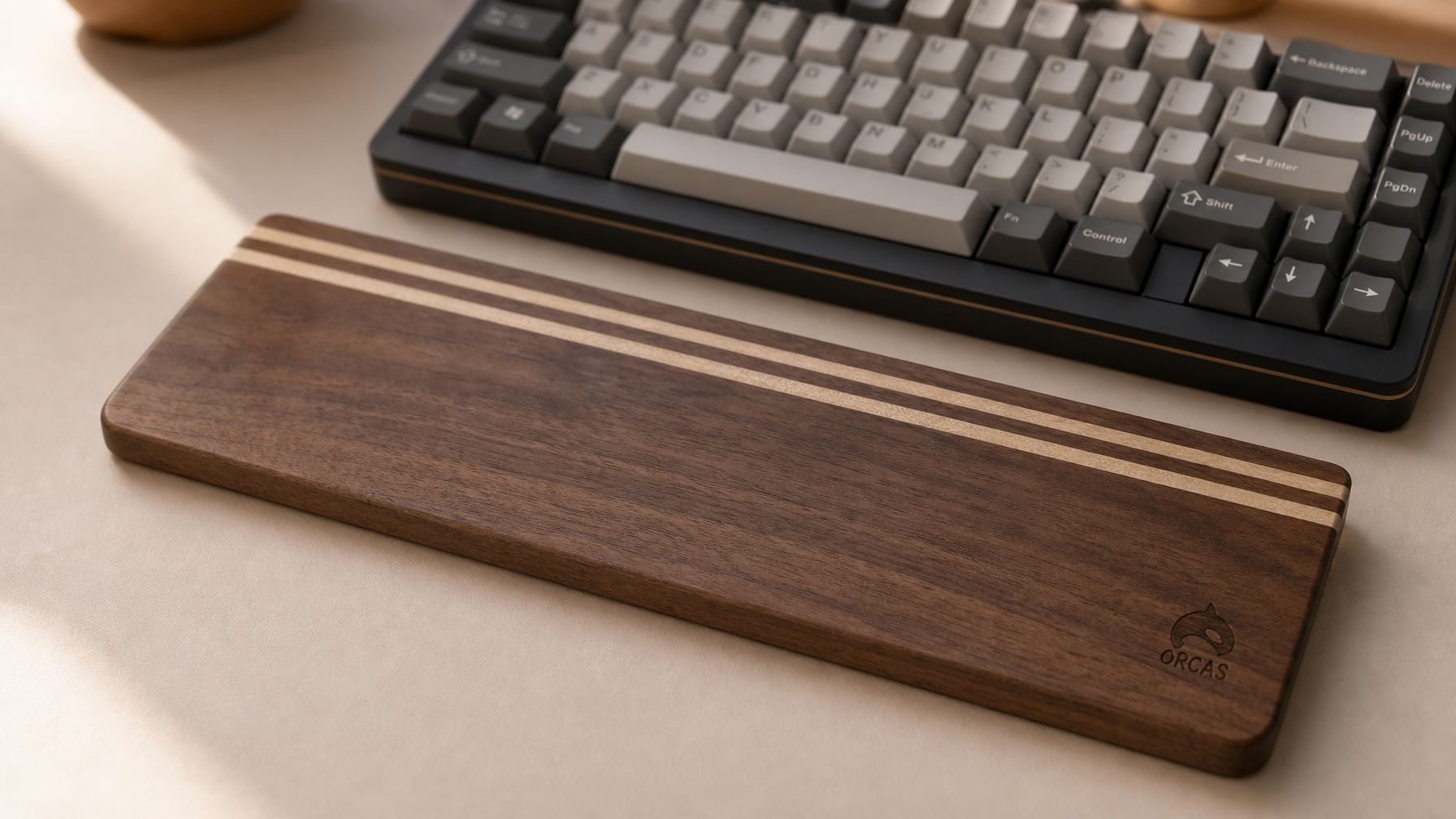
Mechanical keyboards sit higher off the desk than most membrane boards. That extra height means your wrists spend more time in an extended, slightly elevated position. Which adds cumulative strain over a long typing session.
A wrist rest fills that gap. Used correctly (resting your palms during breaks, not while actively typing), it keeps your wrists in a neutral position and reduces the fatigue that builds up across a full workday.
For developers, writers, and anyone who spends six or more hours at a keyboard, a well-chosen wrist rest is a functional investment, not just a desk aesthetic.
Wood vs. Foam vs. Gel: Which Is Better? {#wood-vs-foam-vs-gel}
There are three common wrist rest materials. Each has tradeoffs.
Foam is soft and inexpensive, but it compresses and deforms within months. The support you bought on day one disappears gradually, and you often can't tell when it's no longer doing its job.
Gel feels good initially but gets sticky in warm conditions. It also tends to attract dust and is hard to clean without damaging the surface.
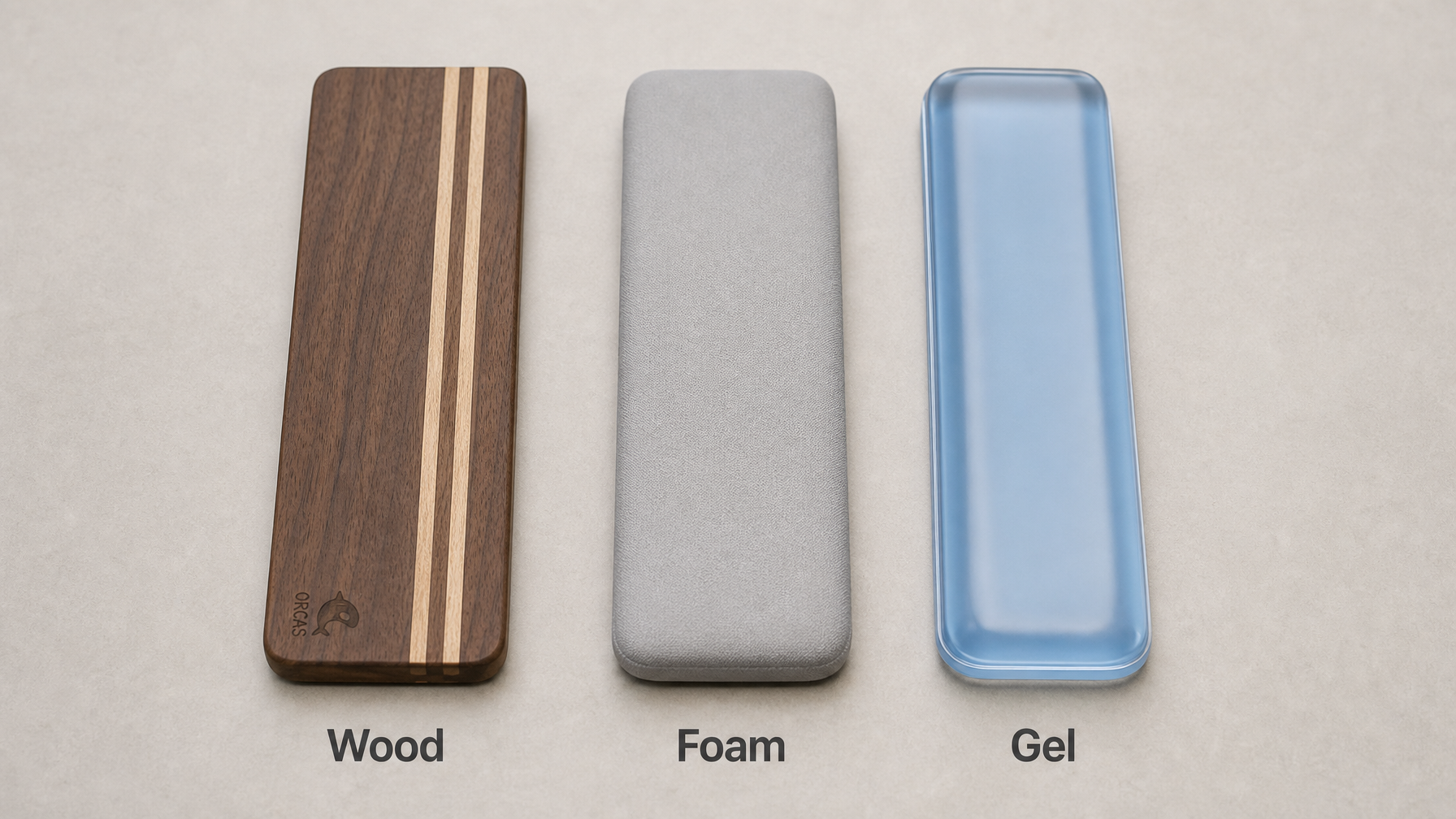
Wood behaves differently. It's a firm, stable surface that doesn't compress or degrade. Your wrists rest at the same consistent height the day you buy it and years later. For people who dislike the "sinking" feeling of soft materials, a wood wrist rest is often the clear preference.
Wood also improves with age. A quality walnut or cherry wrist rest develops a richer patina over time. The desk equivalent of a leather bag that looks better at five years than at five weeks.
What to Look for in a Wood Wrist Rest {#what-to-look-for}
Before buying, check these four things:
1. Finish quality. A smooth, well-sanded surface with a food-safe oil or wax finish protects the wood and keeps it comfortable against bare skin. Rough edges or overly thick lacquer are signs of shortcuts.
2. Anti-slip base. The wrist rest should stay where you put it. Look for a rubberized or cork base that grips the desk without scratching it.
3. Proportional height. The rest should sit at roughly the same height as the bottom row of your keyboard. Too low and it's useless; too high and it forces your wrists into an upward angle.
4. Width match. A wrist rest that's narrower than your keyboard leaves your wrists unsupported at the edges. Match the rest width as closely as possible to your keyboard's footprint.
The Best Wood Species for a Keyboard Wrist Rest {#best-wood-species}
Two species consistently outperform the field.

Walnut is dense, stable, and naturally dark. Ranging from a warm chocolate brown to a deep espresso. It's hard enough to resist denting under daily use and machines to a silky finish. On a desk with dark peripherals or a minimal aesthetic, walnut looks exceptional.
Cherry starts lighter. A pale pinkish-amber. And deepens into a rich reddish-brown with light exposure over time. It's slightly softer than walnut but still plenty durable for a wrist rest. Cherry suits warmer, lighter desk setups and develops one of the most attractive patinas of any domestic hardwood.
Both species are tight-grained, which means they don't absorb oils or sweat readily. A practical advantage for something your hands touch every day.
Sizing: How to Match Your Wrist Rest to Your Keyboard {#sizing}
Keyboard form factor determines the right wrist rest length:
| Keyboard Size | Approximate Width | Recommended Rest Length |
|---|---|---|
| Full-size (100%) | ~440mm | 430. 450mm |
| TKL (80%) | ~360mm | 350. 370mm |
| 75% | ~330mm | 320. 340mm |
| 65% | ~300mm | 290. 310mm |
| 60% | ~285mm | 270. 290mm |
When in doubt, size down slightly rather than up. A rest that slightly underruns your keyboard's width is less awkward than one that overhangs both sides of your desk mat.
Why Handcrafted Beats Mass-Produced {#handcrafted-vs-mass-produced}
Factory-produced wood wrist rests often use low-grade material: finger-jointed scraps, thin veneers over MDF, or heavily lacquered surfaces that feel like plastic. The grain is flat and uniform because it's engineered to be consistent, not because the wood is quality.
Handcrafted rests start with solid hardwood stock. Each piece shows its own grain pattern, its own character. The dimensions are dialed in for comfort rather than manufacturing efficiency, and the finish is applied by hand. Which means it's inspectable, repairable, and replaceable when needed.
The difference in feel is immediate. The difference in lifespan is measured in years.
Where to Buy a Quality Wood Wrist Rest {#where-to-buy}
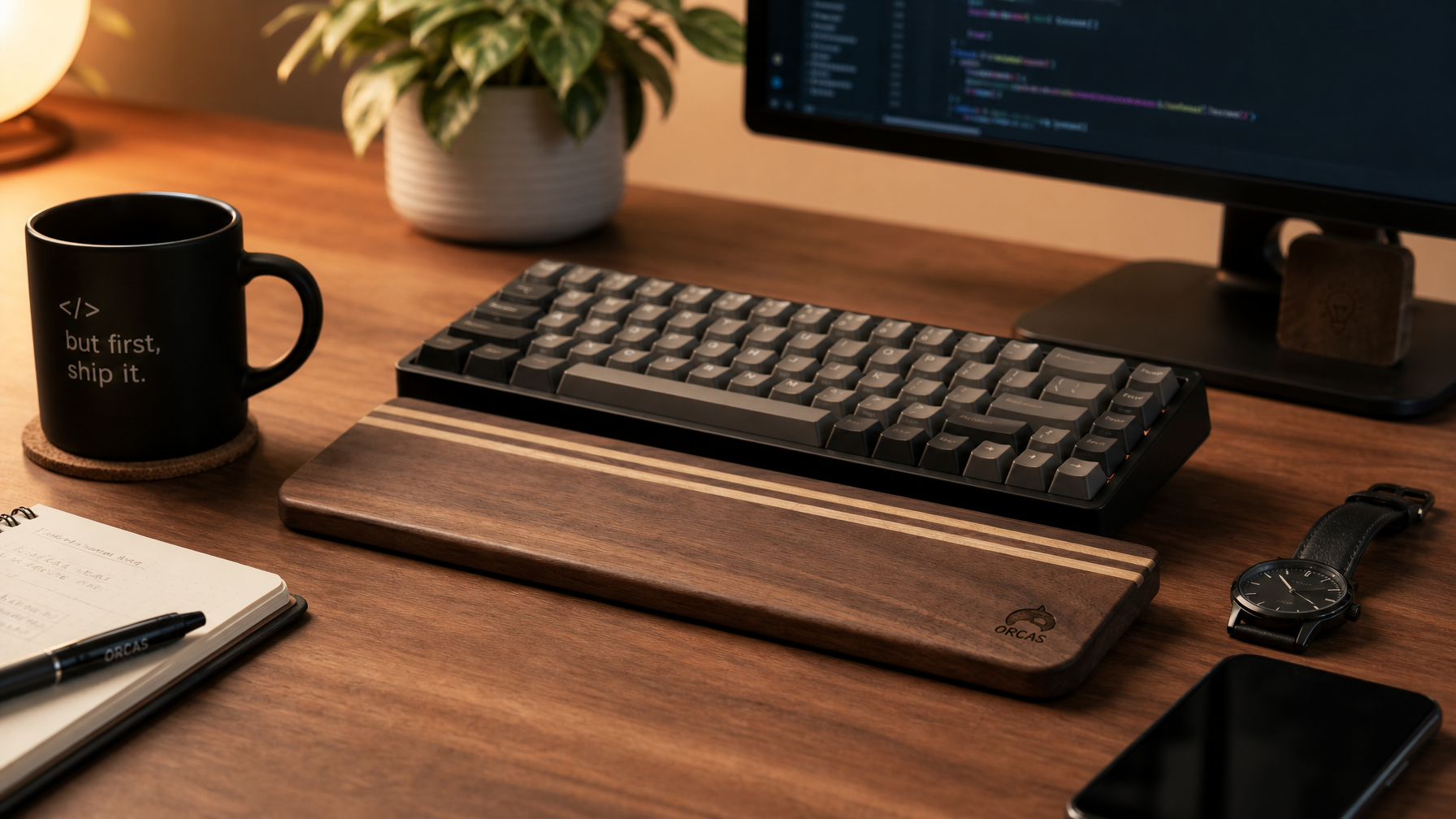
Orcas Made makes handcrafted walnut and cherry wood wrist rests sized for the most popular mechanical keyboard form factors. Every piece is made from solid hardwood, finished with a smooth oil treatment, and fitted with a non-slip base.
If you've been using a foam or gel rest and wondering why your wrists still feel fatigued after a long session, it's worth trying the alternative. A wood wrist rest won't fix every ergonomic problem, but it will give you a stable, consistent surface that holds up. And looks better on your desk than anything foam or gel can offer.
Browse the full lineup at orcasmade.com.